

To prepare your lawn in Michigan for overseeding, start by mowing it shorter than usual, to about 1 to 1.5 inches. This ensures new seeds make direct soil contact, which is crucial for germination, and reduces competition for sunlight and nutrients. Next, remove debris like leaves and sticks to prevent blockages and potential fungal growth. Aerate your lawn to alleviate soil compaction, improving air, water, and nutrient flow to roots. Aeration also enhances seed-to-soil contact and encourages beneficial microbial activity. These steps create optimal conditions for seed germination, promoting a lush, healthy lawn and setting the stage for vibrant turf.
Mow your lawn shorter than usual before overseeding to get good seed-to-soil contact.
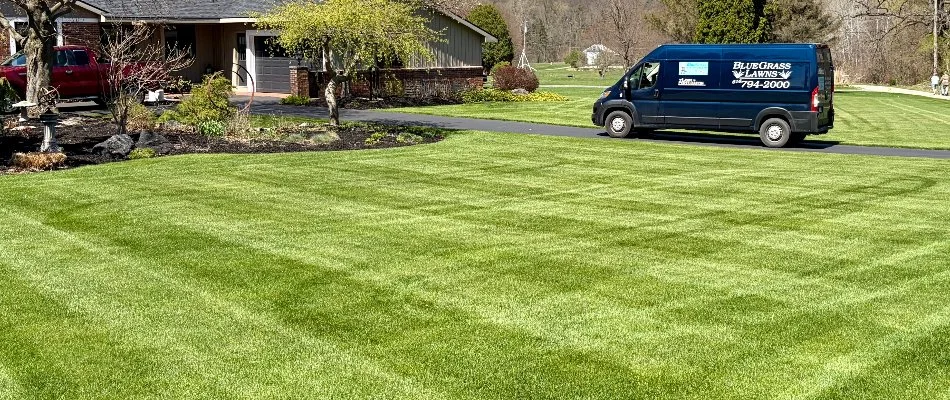
Before you begin overseeding, it's important to mow your lawn shorter than you typically would. Cutting the grass to a lower height helps ensure that the new seeds can make direct contact with the soil, which is crucial for germination. Aim to mow your lawn to about 1 to 1.5 inches. This shorter length reduces the competition between existing grass and new seedlings for sunlight and nutrients. Additionally, it prevents the grass from overshadowing the seeds, allowing them to establish more effectively. Remember to collect and dispose of the clippings to further enhance seed-to-soil contact.
Remove any debris from your lawn that could block the seeds from reaching the soil.
Once you've mowed your lawn, take the time to remove any debris that might hinder the overseeding process. This includes leaves, sticks, and any other organic material that could block the seeds from reaching the soil. Raking the lawn thoroughly will help ensure a clean surface for the seeds to settle. Removing debris not only aids in better seed contact but also prevents any potential fungal growth that can occur when organic material decomposes on the lawn. A clean, clear lawn provides an optimal environment for your new grass to grow strong and healthy.
Aerate your lawn to loosen compacted soil and create tiny holes for the seeds to fall into.
Aeration is a pivotal step in preparing your lawn for overseeding, as it directly enhances the soil environment for optimal seed germination. By creating small holes in the soil, aeration alleviates compaction, which is crucial for improving the flow of air, water, and nutrients to the roots. This process ensures that the new seeds can access the essential elements they need to establish strong root systems. A well-aerated lawn provides a more hospitable environment for seeds, promoting quicker and more successful germination.
Moreover, aeration significantly improves seed-to-soil contact, which is vital for the seeds to take root effectively. The perforations allow seeds to settle into the soil more securely, reducing the risk of being washed away or eaten by birds. Additionally, aeration encourages beneficial microbial activity, which helps break down organic matter and release nutrients essential for growth. By prioritizing aeration before overseeding, you create the ideal conditions for a lush, healthy lawn, setting the foundation for vibrant and resilient turf.
Give us a call today to schedule our overseeding service.
If you're looking to fill in bare spots on your lawn with new grass, we're here to help! At BlueGrass Lawns, we offer an overseeding service that will help you achieve a dense, beautiful lawn. Our team uses perennial ryegrass seeds when overseeding lawns because they are renowned for their fast germination rates and excellent disease and drought resistance.
We offer our overseeding service to homeowners and business owners, as well as HOAs, in Grand Rapids, Lansing, Ada, MI, and throughout the surrounding areas. Give us a call at (616) 794-2000 to schedule our overseeding service today!